
Updated: November 2026 — tipping rates checked against current Nepal trekking advice; figures are per trekker per day unless stated otherwise, and they still apply for 2027 departures.
You have reached the last teahouse of your trek. Your guide kept you safe over a 5,000-metre pass, your porter carried your duffel bag up every one of those steps, and now someone whispers the question nobody wants to ask out loud: how much do we tip?
The internet makes it worse: one site says $10–15 a day, another $15–25, a third gives a lump sum without saying whether it is per person or for the whole group. Most pages never say which basis they use. This post fixes that. Every figure below is per trekker, per day, and the worked examples show what each person pays and what each crew member receives. Figures come from current Nepal trekking advice checked in November 2026; where sources disagree, we say so and give a range, not a false single answer.
First, the one rule that clears up all the confusion
Always ask: per person, or per group?
If it is $15 per trekker per day, a guide leading four trekkers on a 12-day Everest Base Camp trek receives $720. If it is $15 a day from the whole group, the same guide receives $180 — a quarter as much for the same work. Both figures appear online. So read every tipping figure with its basis in mind:
- Per trekker per day — what each person contributes. This post uses this basis throughout.
- Per group per day / total — what the staff member receives from everyone combined. Divide by the number of trekkers to find your share.
- A lump sum with no label — treat it with suspicion, and ask the agency whether it is per group or per trekker before budgeting around it.
One more distinction: a porter is not a guide, and a porter-guide is neither. Your guide navigates and handles logistics and altitude decisions; your porter carries your main bag — usually up to 20–25 kg — and nothing else. A porter-guide does a bit of both on shorter treks and is tipped between the two rates. Tip each role separately, in its own envelope.
Why tipping matters so much in Nepal
Tipping in Nepal is expected on treks, but not legally required. No law sets a tip and no receipt will ever show one.
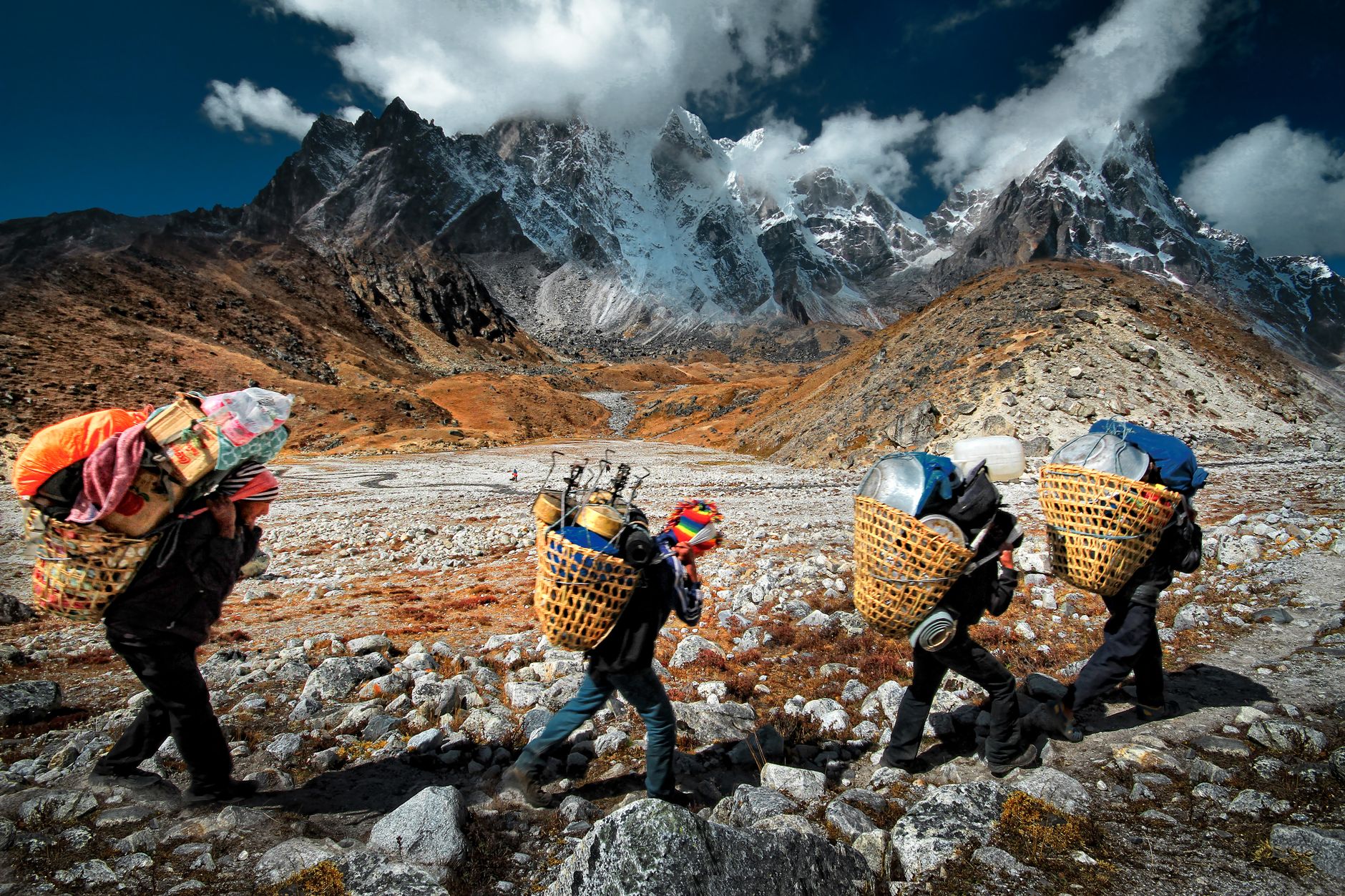
But “not legally required” does not mean “optional in practice.” Wages are modest, and tips are a real and expected part of a crew member’s income. A licensed guide earns roughly US$25–35 per day and a porter roughly US$20–25 per day (do you need a guide to trek in Nepal?); other 2026 sources put guides at US$30–40 and porters at US$15–25. A tip of $10–20 a day for a guide is a substantial addition to a day’s wage, and $7–12 a day for a porter can be a third or more of theirs.
How much to tip: the clean table
All figures are per trekker, per day, for a typical group of two to six trekkers. They are ranges, because published advice genuinely conflicts.
| Role | Tip per trekker per day | What the sources say |
|---|---|---|
| Lead guide | US$12–20 | Some 2026 guides quote $10–15; others $15–20, a few $15–25. |
| Assistant guide | US$8–15 | About two-thirds of the lead guide’s tip; quoted at $7–10 by some, $10–15 by others. |
| Porter (each porter) | US$7–12 | Quoted at $5–10 by some, $8–12 or $10–15 by others. Each porter receives the pooled total. |
| Porter-guide | US$10–15 | Between a porter and an assistant guide — carries a bag and leads the way. |
| Cook / kitchen staff (camping treks only) | US$5–10 each | Usually pooled and divided by the cook. Teahouse treks have no cook. |
Figures are in US dollars, but Nepali rupees are the better currency to tip in (see below). At roughly NPR 148–150 per dollar (checked 20 November 2026), $15 is about NPR 2,200–2,250.
How to use the ranges: the bottom is the fair minimum for solid service; the top is right for excellent service — a guide who rerouted you around bad weather, a porter who carried extra weight when someone fell ill. Short, low treks sit at the bottom; Everest Base Camp or any high-pass trek sits at the top.
Worked examples: Poon Hill, Everest Base Camp, Annapurna Circuit
Three worked examples for a typical group of four trekkers (one lead guide, one assistant guide on the longer treks, one porter per two trekkers).
Example 1: Ghorepani Poon Hill, 5 days
| Per trekker | Group total (4 trekkers) | |
|---|---|---|
| Guide (5 days × $12–20) | $60–100 | $240–400 |
| Porters (5 days × $7–12 each) | $35–60 | $140–240 ($70–120 per porter) |
| Your total tip budget | $95–160 | $380–640 |
Budget roughly $95–160 per person.
Example 2: Everest Base Camp, 12 trekking days
| Per trekker | Group total (4 trekkers) | |
|---|---|---|
| Guide (12 days × $12–20) | $144–240 | $576–960 |
| Assistant guide (12 days × $8–15) | $96–180 | $384–720 |
| Porters (12 days × $7–12 each) | $84–144 | $336–576 ($168–288 per porter) |
| Your total tip budget | $324–564 | $1,296–2,256 |
A standard EBC trip is sold as 14 days, but two are in Kathmandu — guides and porters work 12 trekking days, so tip for those. Mid-range budget: about $440 per person.
Example 3: Annapurna Circuit, 14 trekking days
| Per trekker | Group total (4 trekkers) | |
|---|---|---|
| Guide (14 days × $12–20) | $168–280 | $672–1,120 |
| Assistant guide (14 days × $8–15) | $112–210 | $448–840 |
| Porters (14 days × $7–12 each) | $98–168 | $392–672 ($196–336 per porter) |
| Your total tip budget | $378–658 | $1,512–2,632 |
Mid-range budget: about $520 per person.
If your group is a different size, the per-trekker figures stay the same — that is the point of using them. In a group of two, the guide receives half the group total above; in a group of eight, double. Solo trekkers should tip at the top of the ranges: for a solo 12-day EBC trek, roughly $240 for the guide and $144 for a porter.
When and how to give the tip
When and how: tip on the last night of the trek, at the farewell dinner in the final teahouse — in Lukla on Everest, in Pokhara or the last lodge on Annapurna. Do not wait until you are back in Kathmandu: your porter may already have left for home.
Give cash, in separate envelopes, handed directly to each person — one for the guide, one for the assistant guide, one for each porter. Handing money directly guarantees the right person receives it. In a group, pool the money first — one person collects everyone’s share and presents the envelopes together, ideally with a short thank-you speech.
Which currency: Nepali rupees are best. Clean NPR 500 and NPR 1,000 notes are what your crew will actually spend. Small, clean US dollar bills are also fine and widely accepted on the trail, but avoid large bills, torn notes or coins. Do not tip in other foreign currency; euros, pounds and Australian dollars are difficult to exchange outside Kathmandu.
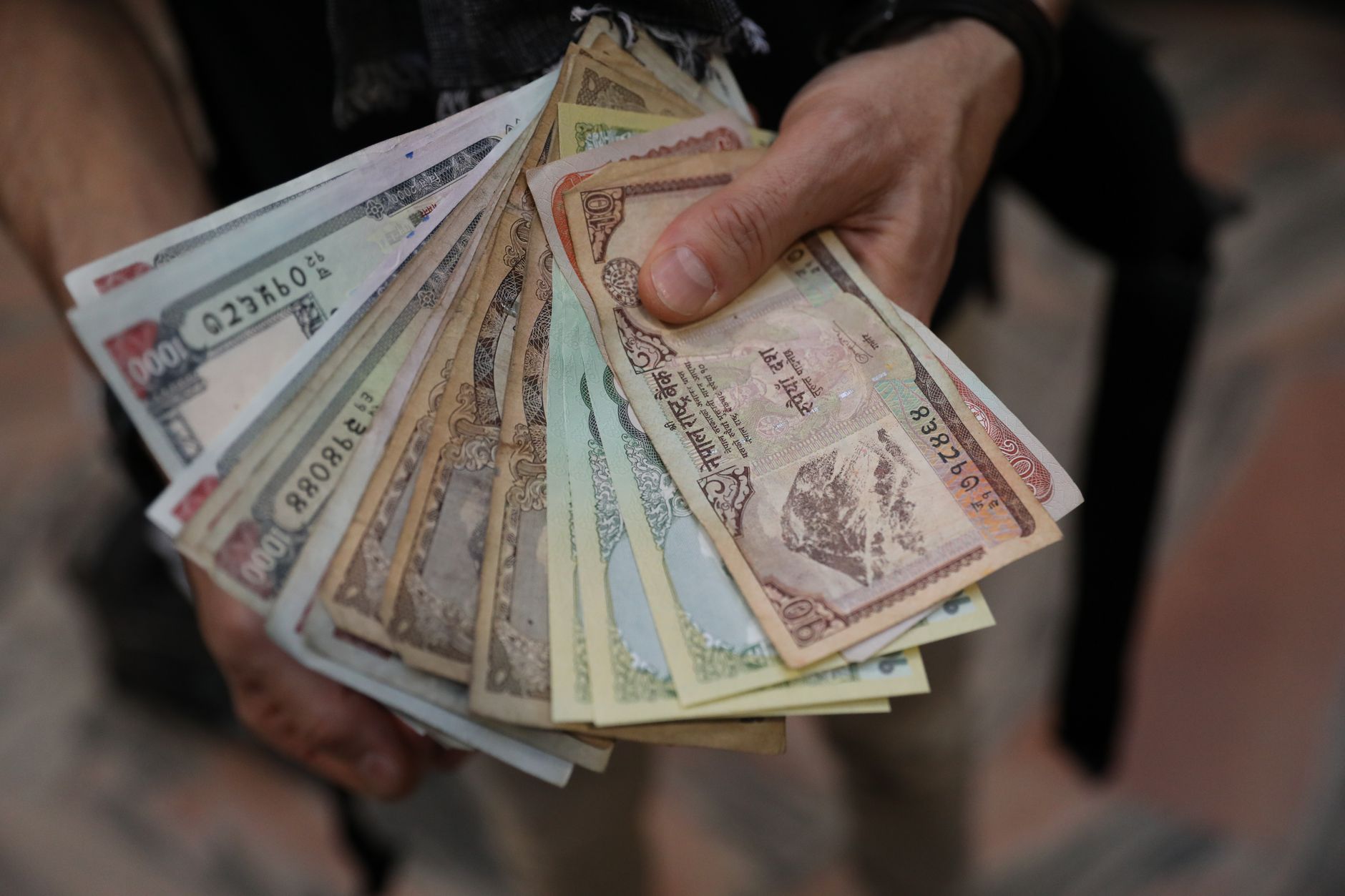
How much cash to carry: tips are one of the biggest cash expenses of a trek, and they come at the end, when your wallet is at its emptiest. A 12-day EBC trek needs roughly $325–565 per person just for tips. Work out your total before you leave Kathmandu — there are no reliable ATMs above Namche Bazaar.
Drivers, city guides and everyone else
- Long-distance drivers (Kathmandu to Pokhara, to the trailhead, or a multi-day jeep journey): NPR 500–1,000 (about US$3–7) per driver, once per journey — not per day. More for a difficult drive, such as the road to Salleri.
- City guides (a Kathmandu sightseeing day or a Bhaktapur walking tour): NPR 1,000–1,500 (about US$7–10) for a full day, roughly half that for a half-day tour.
- Hotel and restaurant staff: tipping is not expected as on a trek. A small tip for a bellboy is appreciated; if a restaurant adds a service charge, no extra tip is needed.
- Teahouse staff: no separate tip is expected — you are already paying for food and lodging.
What to do if the service was poor
A tip is a reward, not a tax. If the service was genuinely poor — a guide who was absent, unsafe or rude, a porter who abandoned bags — you are not obliged to tip at the full rate. But handle it with care: tip less, not nothing — a reduced tip sends a clearer message than no tip, which can be read as forgetfulness. Separate the people — never punish the porters for the guide’s failings, or vice versa. Say why, calmly and privately, and tell the agency in Kathmandu in writing if the problem was serious.
Tipping and your trek budget
Tips are easy to forget when comparing trek prices — no agency quotes them in the headline cost. Add them in before you choose a package: on a 12-day EBC trek, tips add roughly $325–565 per person, and on a 14-day Annapurna Circuit, roughly $380–660 — 10–15% of a typical budget package price.
Settle your insurance before you fly, too. Your crew is covered by the agency’s insurance while they work, but you need your own policy covering trekking to your maximum altitude, including helicopter evacuation — a policy stopping at 4,000 metres is no use at Everest Base Camp’s 5,364 metres.
FAQ
Is tipping required in Nepal, or is it optional?
Not legally required anywhere in Nepal. On treks, though, it is strongly expected and forms a real part of a guide’s and porter’s income. In restaurants and hotels it is genuinely optional.
How much should I tip my guide on a 12-day Everest Base Camp trek?
At $12–20 per trekker per day, budget $144–240 for the guide alone over 12 trekking days (about $180 mid-range). Some sources quote $10–15 a day, others $15–25; this range covers the honest overlap.
Do I tip the porter separately from the guide?
Yes — always separately, in a separate envelope, handed directly to the porter. They do the heaviest physical work on the trek, so never combine the crew’s tips into one lump sum and leave the division to someone else.
Should I tip in US dollars or Nepali rupees?
Nepali rupees are best: clean NPR 500 and NPR 1,000 notes are what your crew will spend. Small, clean US dollar bills are also accepted on the trail. Avoid torn notes, coins, large bills and non-dollar foreign currency.
What if I am trekking solo — do I tip the same per-day rate?
The per-day rate is the same, but tip at the top of the range — you are the guide’s only source of tips. For a solo 12-day EBC trek, roughly $240 for the guide and $144 for a porter.
Conclusion
So: per trekker, per day, tip $12–20 for your guide, $8–15 for an assistant guide, $7–12 for each porter. Over a 5-day Poon Hill trek that is roughly $95–160 per person; over a 12-day Everest Base Camp trek, roughly $325–565; over a 14-day Annapurna Circuit, roughly $380–660. Give it in cash, in separate envelopes, on the last night, in rupees if you can. Remember the question that prevents almost every tipping mistake: per person, or per group? Ask it of every piece of advice you read — including this post. These figures still apply for 2027 departures.
 English
 Chinese
 Spanish
 Polish
 Dutch
 German