
Ask ten websites whether you need a guide to trek in Nepal and you will get at least three different answers. Some say a guide is now mandatory everywhere. Some say you can still walk the Everest trail on your own, as people have for decades. Some are selling you a package, so their answer is not entirely neutral.
Here is the honest version: there is no single rule for all of Nepal. Whether a guide is legally required depends on where you trek. In restricted areas, a licensed guide is genuinely mandatory and your permit will not be issued without one. In Everest and Annapurna, the official position and what is actually enforced at checkpoints have not always matched — that gap is where the confusion comes from. Around the Kathmandu Valley, nobody will ask you for a guide at all.
This post separates what is verified from what is disputed, region by region — and then asks whether a guide is worth the money even where one is not required.
The short answer
- Restricted areas (Upper Mustang, Manaslu, Upper Dolpo, Nar Phu, Kanchenjunga, Humla and similar): guide required. These treks use a Restricted Area Permit, issued through a registered agency with a licensed guide named on it. This part is not controversial.
- Everest, Annapurna and Langtang: the Nepal Tourism Board announced in April 2023 that trekkers in protected areas should trek with a licensed guide and an agency-issued TIMS card. In practice, enforcement has been uneven — independent trekkers have continued to be checked in on some trails, while other checkpoints apply the rule strictly. Treat this as “officially required, inconsistently enforced — verify for your route and month.”
- Day hikes and valley trails (Nagarkot, Chisapani, Shivapuri, Pokhara foothill walks): no guide required. A guide is a nice extra, nothing more.
Why the rules are so confusing
The April 2023 change
Before 2023, independent trekking was simple: you bought a TIMS card (green for independent trekkers, blue for organised groups), bought your park or conservation-area permit, and walked. From April 2023, the Nepal Tourism Board announced that foreign trekkers would need a licensed guide and an agency-issued TIMS card in protected areas, citing safety and employment for licensed Nepali guides.
What happened next
The announcement and the enforcement were never quite the same thing. Some regional bodies objected — the Everest region's local municipality, which issues its own permit at the entrance to Sagarmatha National Park, has at times continued to welcome independent trekkers — and checkpoint practice has differed from trail to trail.
There have been further reported changes since, including reports during 2026 that the old minimum-group requirement for restricted-area permits was removed, so a single trekker with a licensed guide can now hold a permit that previously needed two trekkers. We say reports deliberately: rules have changed repeatedly in three years, and official pages are not always updated at the same speed. The only fully reliable check is the permit-issuing office for your specific route, close to your departure date — the checklist at the end tells you what to ask.

Region by region: the comparison table
| Region / trek | Guide legally required? | What is checked on the trail | Honest practical advice |
|---|---|---|---|
| Upper Mustang, Manaslu, Upper Dolpo, Nar Phu, Kanchenjunga, Humla (restricted areas) | Yes — mandatory | Restricted Area Permit with a licensed guide named on it, at multiple checkpoints | No way around it: permits are agency-issued only. Budget for the guide from the start |
| Everest region (EBC, Gokyo, Three Passes) | Officially yes since Apr 2023; enforcement has varied | Park and local Khumbu Pasang Lhamu permits, checked at Monjo and Namche; TIMS/guide status checked inconsistently | Verify the current position before you fly to Lukla |
| Annapurna region (Circuit, ABC, Mardi, Poon Hill) | Officially yes since Apr 2023; enforcement has varied | ACAP permit and TIMS at checkpoints such as Besisahar, Chame, Jomsom and ABC trail entrances | Same advice as Everest: check before you go; ignore last season's forum posts |
| 廊塘谷 | Officially yes since Apr 2023; enforcement has varied | Langtang National Park entry permit; checkpoints at Dhunche/Syabrubesi and on the trail | Reporting conflicts most here — verify at the park office in Dhunche |
| Kathmandu Valley and Pokhara day hikes | 不 | Nothing, or a simple local entry fee at some trailheads | Go independently with confidence; hire a guide only for the stories |
Note: “officially yes, inconsistently enforced” is not the same as “optional.” Rules can be tightened at the start of any season, and a checkpoint decision on the day is final — whether or not it matches what you read online, including here.
If you are planning dates, start with our Nepal trekking itineraries for 10 days, 2 weeks and 3 weeks.
Two regions worth a closer look
Everest: the region everyone argues about
Everest has the strongest tradition of independent trekking, and a local authority that has not always agreed with the national announcement. What is not in dispute: you need the Sagarmatha National Park entry permit and the Khumbu Pasang Lhamu rural municipality permit, both are checked, and the trail is busy and well-marked. What is disputed, season by season, is whether an independent trekker will be turned back for not having a guide. Confirm the current position in Kathmandu or Lukla before committing to an unguided plan. Annapurna follows the same pattern — ACAP permit certain, guide enforcement uneven — with one extra complication: jeep roads now reach well into the Circuit, so route choices matter more than they used to. Langtang, the closest big trek to Kathmandu, is where reporting conflicts most, so the Dhunche park office check matters there above all.

Restricted areas: no debate at all
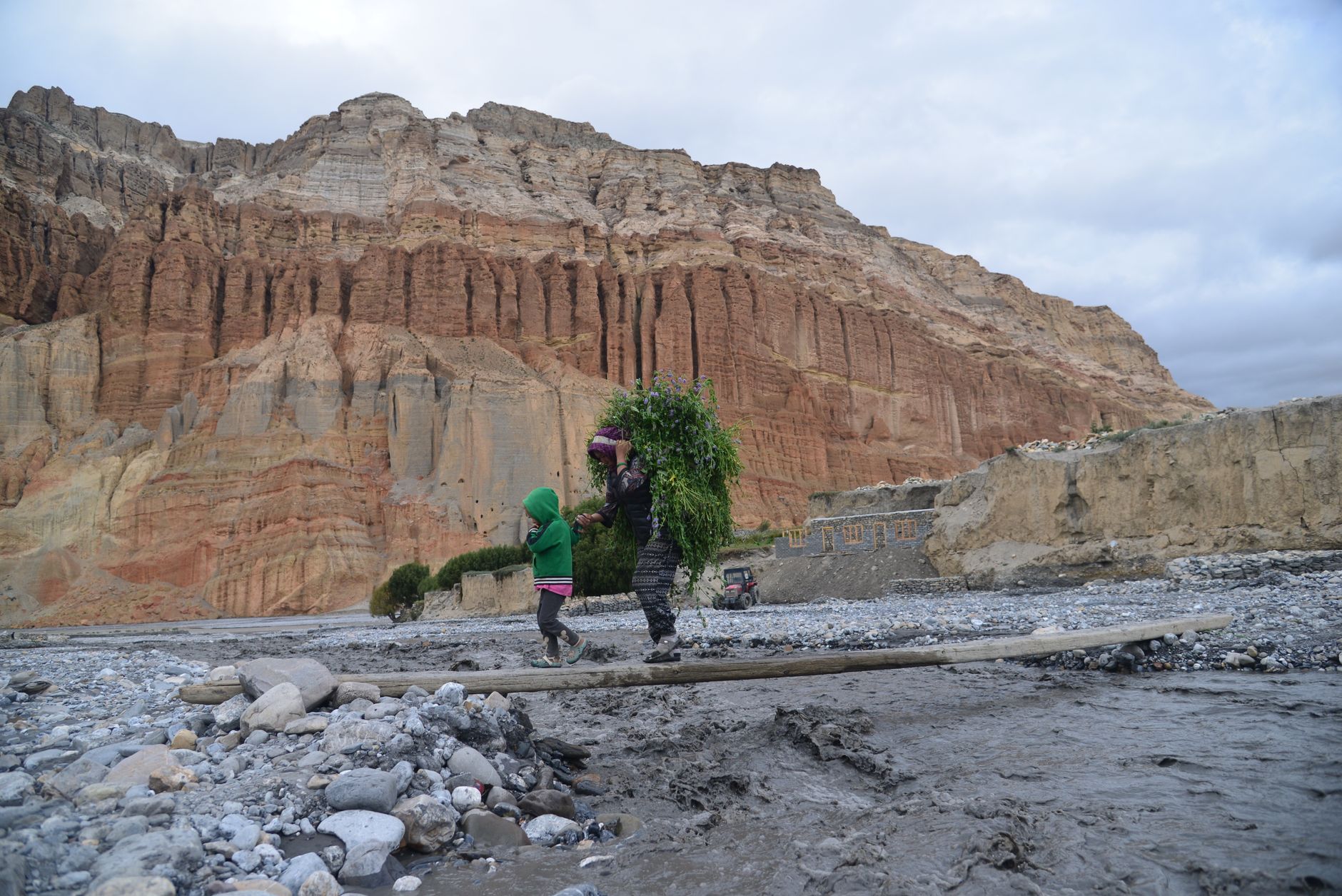
The restricted areas sit near sensitive borders or inside tightly controlled conservation zones, and their system is clear: a Restricted Area Permit, issued only through a registered agency, with a licensed guide attached, plus conservation-area permits on top. If a website offers you one of these treks “fully independent,” it is wrong. The compensation is real: these are Nepal's least crowded, most culturally intact trails, and the guide is usually a local who opens doors that stay closed to outsiders.
Required or not: what a guide actually does for the money
Strip the legal argument away and a good guide earns their fee in four ways. Navigation and logistics: trails fork, bridges wash out, jeep roads move trailheads, and teahouses fill by mid-afternoon in peak season — a guide handles all of that while you just walk. Altitude judgement: on Everest Base Camp, the most valuable skill is a calm, experienced reading of how you are acclimatising, and the authority to tell you to take an extra night or go down. Language and culture: a guide turns a row of stone houses into a village with names and festivals, and negotiates everything from dal bhat refills to a bed in a full lodge. Problems: when a flight is cancelled or a permit has the wrong date, a guide has contacts and a plan B.

A guide does not carry your main bag — that is a porter — and does not remove the need for travel health insurance for Nepal, fitness or acclimatisation days.
What does a guide cost in 2026?
Prices vary by region, season and experience, so treat these figures as approximate ranges to verify when you book, not a fixed tariff. In the main trekking regions, hiring an independent licensed guide directly costs roughly US$25–35 per day; a porter roughly US$20–25 per day, and a porter-guide somewhere in between. Agency packages fold the same costs into a per-trip price covering overhead, permits and sometimes your food and lodging too.
Full disclosure, stated once and plainly: guiding is the service this website sells, and you can hire an independent trekking guide in Nepal here for about US$25 per day — we have kept the rest of this post as neutral as we can precisely because we are not a neutral source on this question. Whoever you hire, confirm in writing what the rate includes (the guide's food, lodging and transport on the trail are normally covered by the client), agree rest days in advance, and check the licence: a licensed guide carries an NMA/NTB-issued identity card and should be happy to show it.
Before you go: a five-minute rule check
Do this shortly before any trek where the answer matters:
- Name your exact route and trailhead — rules are route-specific.
- Ask the Nepal Tourism Board office or the relevant park/conservation office: “For this route, this month, is a licensed guide required, and which permits and TIMS card do I need?”
- For a restricted area, get the answer through a registered agency and the Department of Immigration permit system — there is no self-issue option.
- Save the answer with a date; it is the best help you can have if a checkpoint later applies a different rule.
- Re-check if your trek is months away — a rule announced for next season may not exist in anything you read today.
常问问题
Can I still trek to Everest Base Camp without a guide?
Independent trekkers have continued to walk the Everest trail since 2023, because enforcement there has varied — but the official position is that a licensed guide is required in protected areas, and enforcement can change at the start of any season. Verify the current position for your month before planning an unguided trek; an old forum post is not a permit.
Is a guide mandatory for the Manaslu Circuit and Upper Mustang?
Yes. Both are restricted areas: permits are issued only through a registered agency with a licensed guide named on the permit, and checkpoints enforce it. Reports during 2026 suggest the old two-trekker minimum was removed, so a solo trekker with a guide may now be possible — confirm this with the issuing agency, because it is recent and reporting differs.
What is TIMS, and do I still need it?
TIMS (Trekkers' Information Management System) is the registration card recording who is on which trail. Since 2023, TIMS for protected-area treks has been tied to agency issue and the guide system, so older references to different card colours describe a system that no longer works quite that way. Whether TIMS applies to your route is part of the five-minute check above — it genuinely varies.
How much should I budget for a guide on a 12-day EBC trek?
At roughly US$25–35 per day, budget about US$300–420 for the guide's fee, plus the guide's food, lodging and Lukla flight costs as agreed, and a tip if the service was good. An agency package prices the same trek differently because it bundles permits, logistics and overhead — compare what is included, not just the headline number.
Is it worth hiring a guide if my trek does not require one?
For a first high-altitude trek, tricky logistics, or limited days that a cancelled flight or full lodge would wreck — usually yes. For an experienced trekker on a short, low, well-marked trail like the Kathmandu Valley walks, honestly, often no. The value case and the legal case are different questions; this post has kept them separate so you can decide each clearly.
结局
So, do you need a guide to trek in Nepal? In restricted areas, yes — full stop, and your permit depends on it. In Everest, Annapurna and Langtang, the official rule since April 2023 says yes, enforcement has been inconsistent, and anyone giving you a flat answer either way is simplifying a genuinely unsettled situation. On valley day hikes, no. Check the rule for your exact route close to departure, budget honestly, and then make the second decision — the value one — with clear eyes.


 Chinese
 English
 Spanish
 Polish
 Dutch
 German