
Updated: November 2026 — prices and times checked 21 November 2026; figures are planning ranges for the 2026–27 season and the 2027 spring season, and fares change with fuel prices and demand.
Kathmandu to Pokhara is only about 200 kilometres, and almost every traveller in Nepal makes the trip — Pokhara is the gateway to the Annapurna treks. In 2026, it is a choice between three very different days.
Here is the honest answer first: the tourist bus costs US$9–25 and takes 7–9 hours, often longer. The flight costs US$90–135 for a foreign traveller and spends 22–25 minutes in the air, but allow 3–3.5 hours door to door. A private car with driver costs US$120–160 for the whole vehicle and takes 6–8 hours, plus any stops you make.
The route in numbers
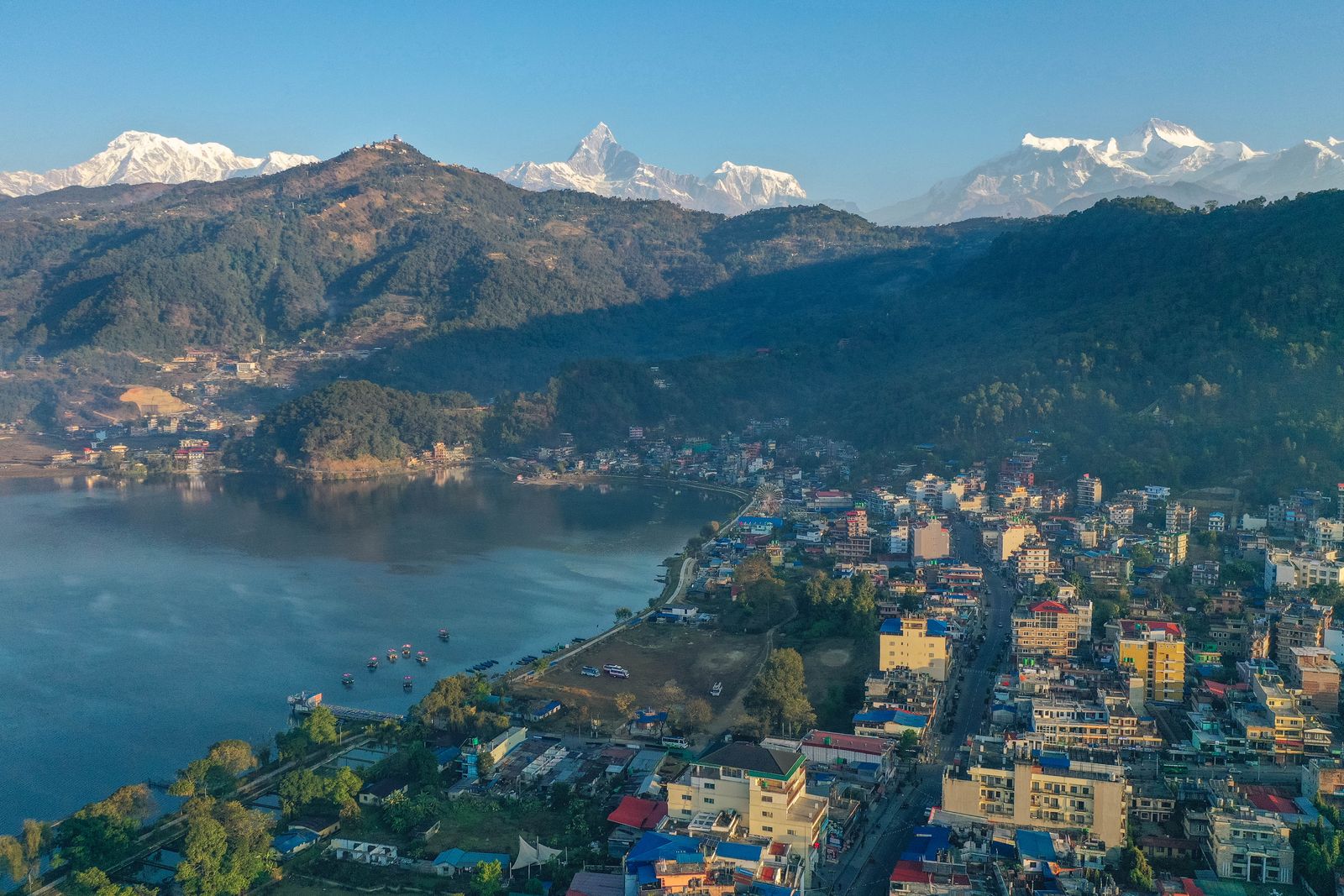
The road distance is about 200 km, most of it on the Prithvi Highway — 173–174 km from Naubise, just west of Kathmandu, to Pokhara. The highway leaves the valley at Nagdhunga and follows the Trishuli and Marsyangdi rivers to Pokhara, passing Mugling on the way.
That sounds like a five-hour drive on paper. It is not: an Asian Development Bank–funded project is widening the old two-lane road into a four-lane highway, and the Mugling-to-Pokhara stretch has long unpaved sections, temporary single-lane bridges and slow detours. When the work finishes, the drive should take about four hours.
One more thing: from 21 November 2026, sections of the Prithvi Highway, including Ghoptebhir, close to traffic from 11:00 to 16:00 every day "until further notice" for repair work, according to Chitwan's District Traffic Police Office (reported by OnlineKhabar on 20 November 2026). Travel by road only if you can pass the works before 11:00 — or fly.
Bus vs flight vs car: the comparison
| autobús turístico | escapada | Private car / jeep | |
|---|---|---|---|
| preguntar el precio | US$9–25 per seat | US$90–135 one-way (foreigners) | US$120–160 per vehicle |
| rato | 7–9 hours, up to 10–12 on bad days | 22–25 min in the air; 3–3.5 hrs door to door | 6–8 hours, plus your stops |
| alivio | Reserved seat, AC, a long winding day | Smooth and short, with airport queues | Your own pace, AC, stop when you like |
| valija | Large bag in the hold | 20 kg checked + 5 kg cabin | The whole boot — no weight worry |
| mejor para | Budget and solo travellers | Short trips, carsickness, tight schedules | Families, groups, and stops on the way |
Option 1: the tourist bus — the default choice
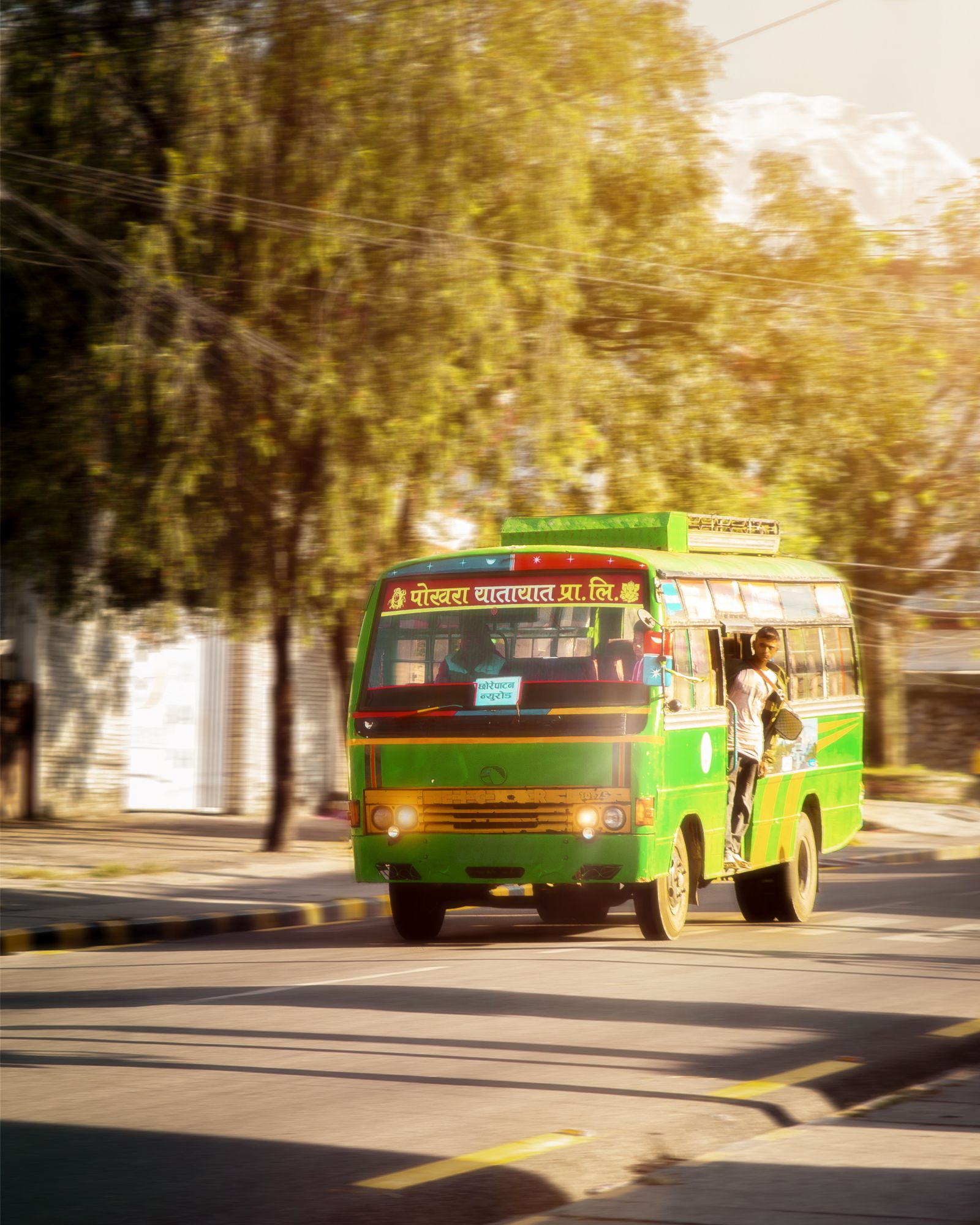
The tourist bus is what most foreign visitors take: a reserved seat, a fixed departure, and a fare that leaves your budget intact. Buses leave from Sorhakhutte, on the edge of Thamel, at about 7:00 am — arrive by 6:30 am — and reach the Tourist Bus Park in Pokhara, near Rashtra Bank Chowk. A taxi from there to Lakeside costs about NPR 300–500.
Fares in 2026: standard deluxe NPR 1,200–1,400 (US$9–11); super deluxe with better legroom and USB charging US$11–13; VIP sofa bus with wide 2×1 seats US$13–15; premium VIP US$15–17; and Greenline, the most established luxury operator, NPR 2,500–2,800 (US$20–23), including lunch, drinking water, an onboard toilet and Wi-Fi. So the honest range for a tourist bus seat is US$9–25. Check exactly what your fare covers before you pay — Greenline includes lunch in Kurintar; cheaper sofa buses at US$11.50–14 cover the seat and the ride only.
Expect 7–9 hours on the highway, 7.5–9.5 on the slower deluxe buses, with two or three stops along the way. But from Mugling to Pokhara the widening works bite — gravel detours, dust, and long queues behind trucks. On a bad day — heavy rain, a landslide, festival traffic — the trip stretches to 10–12 hours.
Book a day or more ahead, earlier at festival time. Sit towards the front if you get carsick, and keep water, snacks, a warm layer, medicines, a power bank and your passport in a small bag with you.
The cheapest option of all is the local bus or microbus (HiAce van): about NPR 500–700 (US$4–5) from the New Bus Park at Gongabu, taking 6–7 hours. It is cramped, with roof-rack luggage, frequent stops and no reservation — take it only if your budget truly demands it, and never the day before a trek starts.
Option 2: the flight — 25 minutes that costs a hundred dollars
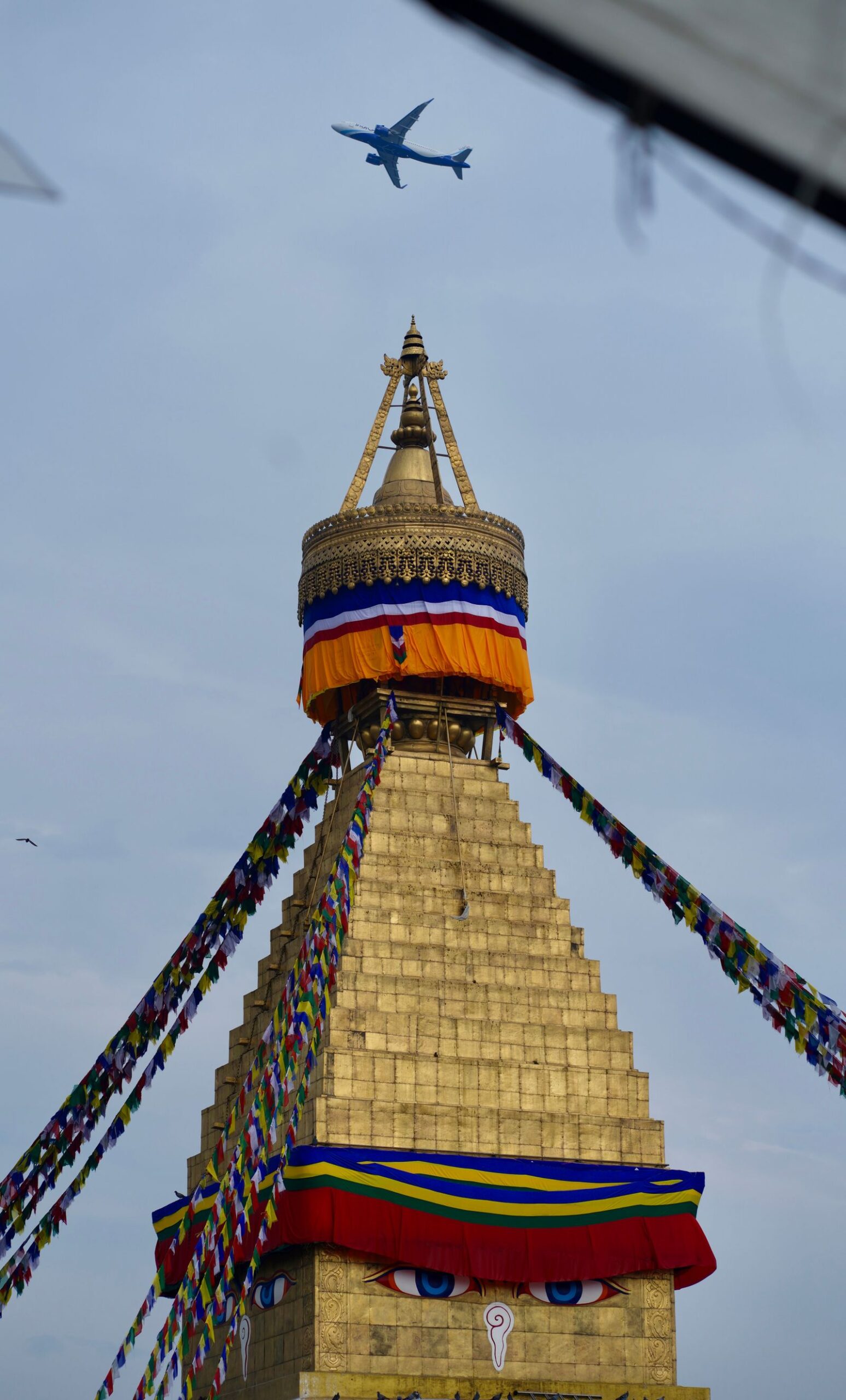
Flying is the fastest way between the two cities by an enormous margin, and on a clear morning the Annapurna range fills the window for most of the flight. Buddha Air, Yeti Airlines and Shree Airlines fly the route many times a day, roughly 6:30 am to 5:00 pm — Buddha Air alone runs 12–18 flights a day.
The aircraft are small ATR 72 turboprops, and the flight itself takes 22–25 minutes in the air, about 30 minutes gate to gate. But allow 3–3.5 hours door to door, including the domestic terminal, check-in and security, and the transfer from Pokhara International Airport into Lakeside.
Fares use Nepal's official two-tier pricing. Foreign passport holders pay a separate US-dollar fare: about US$90–135 one-way, depending on the airline, the fare class and how far ahead you book — Buddha Air's foreign fares run about US$92–120. Nepali and Indian citizens pay rupee fares of about NPR 4,200–6,800 one-way. Book two to three weeks ahead; last-minute peak-season seats sell at the top of the range.
You leave from the domestic terminal at Tribhuvan International Airport and land at Pokhara International Airport, which opened on 1 January 2023. Baggage allowance is typically 20 kg checked plus 5 kg cabin — generous compared with the 15 kg limit on the flight to Lukla.
The catch is the weather: mountain weather delays domestic flights regularly, so do not plan a tight connection on the same day. If your flight is cancelled, the airline rebooks you, but in peak season the next available seat may be the following day.
The same airlines and aircraft fly the much more demanding Kathmandu–Lukla route. Our guide to Volando a Lukla explains how those mountain flights work, including why many leave from Ramechhap rather than Kathmandu.
Option 3: a private car or jeep — your own timetable
A private car with driver costs about US$120–160 for the whole vehicle one-way. The Nepal Tourist Vehicle Association's 2026 rate card lists a Kathmandu–Pokhara charter at NPR 18,675 — about US$125 at roughly NPR 149–150 per dollar — and several 2026 guides quote US$120–160 depending on the vehicle. Split four ways, it is cheaper per person than the bus.
The drive takes 6–8 hours including short stops, on the same road and through the same roadworks as the bus — a car is not magically faster, and some 2026 guides put the honest range at 7–9 hours. What you buy is control: you leave when you like, stop when you like, and carry what you like. Book through your hotel or a travel agent, and confirm whether fuel, tolls and the driver's return are included.
Stops worth making on the way
Kurintar and the Manakamana cable car. The cable car's base station is at Kurintar, on the highway between Malekhu and Mugling. Six-person cabins cover 3 km in about 10 minutes, up to the top station at 1,302 m, close to the Manakamana temple. It runs 8:00 am to 5:00 pm, with a break from 12:00 to 1:30 pm — check it is running before you plan the stop.
Bandipur. A hill town at about 1,000 m, reached by a road climbing about 8 km from Dumre — roughly 30 minutes by local bus. Its traffic-free bazaar street and Himalayan panorama make it the best overnight break on the route. There is no direct public bus from Kathmandu to Bandipur, so it works best with a private car.
Which should you choose?
- Fly if your trip is short, if winding roads make you ill, or if you need to be in Pokhara the same morning.
- Take the tourist bus if you are travelling solo, watching your budget, and happy to trade a day for the scenery and the saving — and pay the extra few dollars for a sofa seat.
- Hire a car if there are three or four of you, if you have heavy luggage, or if you want to stop at Manakamana or sleep in Bandipur.
- Take the local bus only if the budget truly demands it.
Whichever you choose, remember the money side before you leave Kathmandu: bus tickets, taxis and roadside meals are all paid in Nepali rupees, so sort your cash in the city — our guide to currency exchange in Nepal explains where to get the best rates. If Pokhara is the start of an Everest trek, you will need a much bigger cash plan: our breakdown of how much cash to carry on the Everest Base Camp trek works out the real numbers village by village.
Una nota sobre 2027
These figures are planning ranges for the 2026–27 season, checked on 21 November 2026. For the spring 2027 season (March–May), expect fares to rise roughly 5–10% and the same roadworks to still be under way — the widening is a multi-year project, and the daytime closures are "until further notice", so check the road the day before you travel. What may change is the Nagdhunga Tunnel, inaugurated in July 2026 and open only to emergency vehicles during its trial period — if it opens to general traffic in 2027, the worst bottleneck leaving Kathmandu disappears.
preguntasrán el
How long does the bus from Kathmandu to Pokhara take?
Plan on 7–9 hours for a tourist bus in 2026, and 7.5–9.5 hours on the slower deluxe buses. On a bad day — heavy rain, a landslide, festival traffic or the daytime closures — it can stretch to 10–12 hours.
How much is the flight from Kathmandu to Pokhara?
Foreign travellers pay about US$90–135 one-way with Buddha Air, Yeti Airlines or Shree Airlines, depending on fare class and how far ahead you book. Nepali and Indian citizens pay about NPR 4,200–6,800. The flight takes 22–25 minutes in the air, but allow 3–3.5 hours door to door.
Is the road from Kathmandu to Pokhara open?
Yes, but with roadworks. The Prithvi Highway is being widened to four lanes, and from 21 November 2026 sections including Ghoptebhir close from 11:00 to 16:00 every day until further notice. Leave early, travel by daylight, and check the road the day before you go.
Where do tourist buses to Pokhara leave from?
From Sorhakhutte, on the edge of Thamel in Kathmandu, at about 7:00 am — arrive by 6:30 am. Buses arrive at the Tourist Bus Park in Pokhara, near Rashtra Bank Chowk; a taxi to Lakeside costs about NPR 300–500. Local buses leave from the New Bus Park at Gongabu instead.
Can I reach Pokhara and start trekking the same day?
By flight, yes — a morning flight puts you in Lakeside before lunch. By bus, no: you arrive in the late afternoon at best, so plan your first trekking day for the following morning. If you are heading to the Annapurna region, first check whether you need a guide to trek in Nepal — the rules changed in 2026.
idea de narración
There is no single best way from Kathmandu to Pokhara — only the best way for your trip. The flight buys you a day for about a hundred dollars. The tourist bus buys you the same arrival for ten to twenty-five dollars. The private car buys you the freedom to stop, for about the price of four bus seats. Pick the one that matches your budget, your stomach and your schedule — and leave early.
 Spanish
 English
 Chinese
 Polish
 Dutch
 German